Hidden Waters – What is Groundwater Flooding?
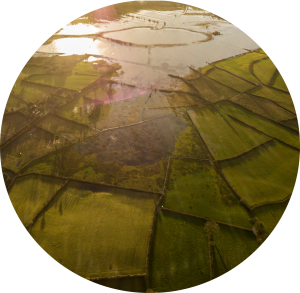
Typically, we picture flooding as a sudden event, such as rivers bursting their banks or flash floods after a storm. However, groundwater flooding operates on a much longer timescale. It occurs due to the water table gradually rising after long periods of sustained rainfall, eventually saturating the ground to the point of inundating basements, buried services and emerging at the surface.
As flood water cannot drain into the saturated underlying strata, groundwater flooding can take as long to recede as it did to arrive, leaving affected areas inundated for weeks or even months. Groundwater flooding tends to manifest in several ways including:
- A higher water table, resulting in inundation to basements, foundations and underground infrastructure.
- Increased baseflow in rivers, due to the ground being saturated, which in turn increases fluvial flood risk and decreases flood response times.
- Increasing pore water pressures and velocities, removing fine particles and increasing landslip risk.
The Geology of Groundwater Flooding – Where is at Greatest Risk?
Though any area of low-lying ground can be at risk of groundwater flooding, regions underlain by chalk aquifers as well as sand and gravel river valleys, are much more susceptible. Chalk aquifers typically have dual porosity and permeability, due to fractures and fissures within an otherwise much more dense body of microporous material. This means the chalk can transmit water very quickly, as well as store large volumes of water. In valley bottoms and in the absence of anywhere for the water to go, such as a nearby groundwater abstraction or drain, this can result in prolonged periods of saturation following heavy rainfall.
Consequently, the regions most affected by groundwater flooding are those situated above chalk or limestone aquifers (limestone is similar in hydraulic terms to chalk) and in some cases shallow gravels connected to low lying river valleys. These geologies are concentrated across the south and east of England, effecting regions such as the Chalk Downlands, the Cotswolds, the Thames Valley, East Yorkshire and Lincolnshire.
So, how do we understand groundwater flooding in order to protect those in the most vulnerable areas?
Understanding Groundwater Flood Risk – What data are available?
Unlike surface water flooding, groundwater flooding is typically driven by geological susceptibility rather than topography, although low lying areas may also a factor. Geological data useful in the assessment of groundwater flood risk is available at a national scale across the UK. This includes national scale mapping of geology, soils, aquifer productivity and hydrogeology. Below, we examine how these national mapping tools facilitate a more robust understanding of flood risks.
British Geological Survey (BGS) Geoviewer – Mapping of bedrock and superficial deposits across the UK, allowing for an overview of strata e.g. chalk that is more susceptible to groundwater flooding.
SoilScapes – Indicates if soils have free or impeded drainage, which could influence groundwater flood risk.
BGS Hydrogeology Maps – Comprehensive overview of the hydrogeology and productivity of aquifers across the UK use as productive aquifers are much more susceptible to groundwater flooding.
For more in-depth assessments available data from Lead Local Flood Authorities (LLFAs), who are responsible for managing the risk of flooding from groundwater, can be useful for understanding flooding at a local scale and understanding if any historic flood events have occurred. The Environment Agency (EA) also maintain an online public database, allowing users to input their address and in return receive a free summary of all flood risks at their location, including a summary of groundwater flood risk, where available (see Check Long Term Flood Risk).
The BGS has also produced a paid ‘groundwater flooding susceptibility map’ which defines areas a risk from groundwater flooding within three categories: limited potential for groundwater flooding, potential for groundwater flooding of property situated below ground and potential for groundwater flooding to occur at surface, a valuable tool to identify risk specific to houses and development.
Exciting New Developments – BGS Urban Groundwater Models
For a comprehensive and engaging overview of groundwater flood risk in urban areas, the BGS in their 3D Urban Geology Programme, have produced interactive geological models covering London, Glasgow, Cardiff, Liverpool and Gateshead. These models allow users to navigate the subsurface, create cross-sections, synthetic boreholes and horizontal slices through the subsurface. They are designed to help users understand spatial variations in recharge to superficial and bedrock aquifers and highlight areas where outflows from bedrock or historic mine workings might increase groundwater flood risk.
Alongside the models open access reports were produced for each city providing additional information on topic such as geology and hydrogeology. Urban study reports were also created for a number of other cities and towns across the UK between 1969 and 1996. All information is freely available at BGS Urban Interactive Models. This information is useful for understanding groundwater flood risk at a more in-depth level, aiding in planning and development across major cities in the UK.
With so much available data, what is the best way to effectively assess groundwater flood risk for developments?
Precision Planning – Groundwater Flood Risk Assessments
Across the UK, flood risk assessments (FRAs) are mandated for planning applications proposing development in areas of high risk, for developments of a certain size and in areas with a known history of flooding. When conducting an FRA, groundwater flood risk must be assessed in order to follow regulatory requirements and to ensure a development is resilient to all forms of flooding. In order to assess groundwater flooding we recommend a tiered approach:
First a high level overview of groundwater flood risk, consulting the government’s Long-Term Flood Risk Map alongside BGS national geology mapping and soil mapping. In urban areas where 3D models and urban study reports are available these can be used alongside wide scale mapping for a more technical insight into groundwater mechanisms and human influences.
If the initial review identified potential for groundwater flooding, a more site-specific approach should be taken. This includes purchasing BGS groundwater flood map tiles for use within geographic information systems (GIS), consulting with the LLFA to obtain any local information or historical records of groundwater flooding and obtaining nearby borehole data determine the typical and peak levels for the water table. This will allow for an in-depth analysis of the groundwater flood risk, ensuring that development can be designed and built to mitigate groundwater flood risk.
The Last Word
WHS provides environmental consultancy across a wide range of flood risk scenarios. Our team possesses an understanding of catchment hydrology, hydrogeology, and environmental impact assessments and most importantly, we understand the nuances of regulatory requirements, allowing us to deliver robust, reliable, FRAs, drainage strategies and designs, that navigate the planning process for developments across the country.
WHS are currently supporting Oxfordshire County Council in consultations with Thames Water Company and the EA, regarding the use of groundwater modelling techniques to assess and mitigate groundwater flood risk associated with the water company’s proposed new reservoir near Abingdon, Oxfordshire, namely the White Horse Reservoir Project (see White Horse Reservoir in Oxfordshire).
Sources
https://www.bgs.ac.uk/geology-projects/urban-geoscience/3d-urban-geology/
https://www.bgs.ac.uk/news/new-3d-model-to-help-mitigate-groundwater-flooding/
https://www.bgs.ac.uk/datasets/groundwater-flooding/
https://mapapps2.bgs.ac.uk/geoindex/home.html
https://geologyviewer.bgs.ac.uk/
https://www.gov.uk/government/collections/groundwater-current-status-and-flood-risk
https://www.landis.org.uk/soilscapes/